
Numeracy
Our Vision
At Heathmont East Primary School, we strive to develop confident, capable and curious mathematicians who can think critically, solve problems, communicate their reasoning and apply their learning in meaningful ways.
Our Numeracy program is designed to build strong mathematical foundations while fostering perseverance, creativity and a growth mindset. We want students to see themselves as successful mathematicians who are willing to take risks, learn from mistakes and tackle new challenges with confidence.
How we teach Mathematics
Our teaching is guided by the Victorian Curriculum, the Victorian Teaching and Learning Model (VTLM 2.0) and evidence-based teaching practices.
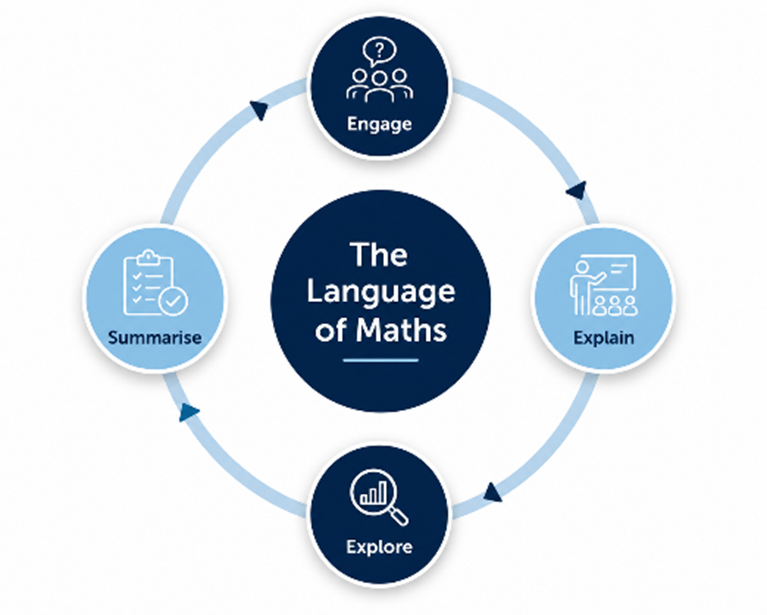
At HEPS, mathematics lessons are structured around our instructional model: Engage, Explain, Explore and Summarise. Teachers combine explicit instruction with opportunities for guided practice, collaboration and independent application, ensuring students develop both understanding and confidence.
Engage
We begin by activating prior knowledge and preparing our students for new learning. This stage helps students strengthen fluency, build confidence and make connections to what they already know.
Explain
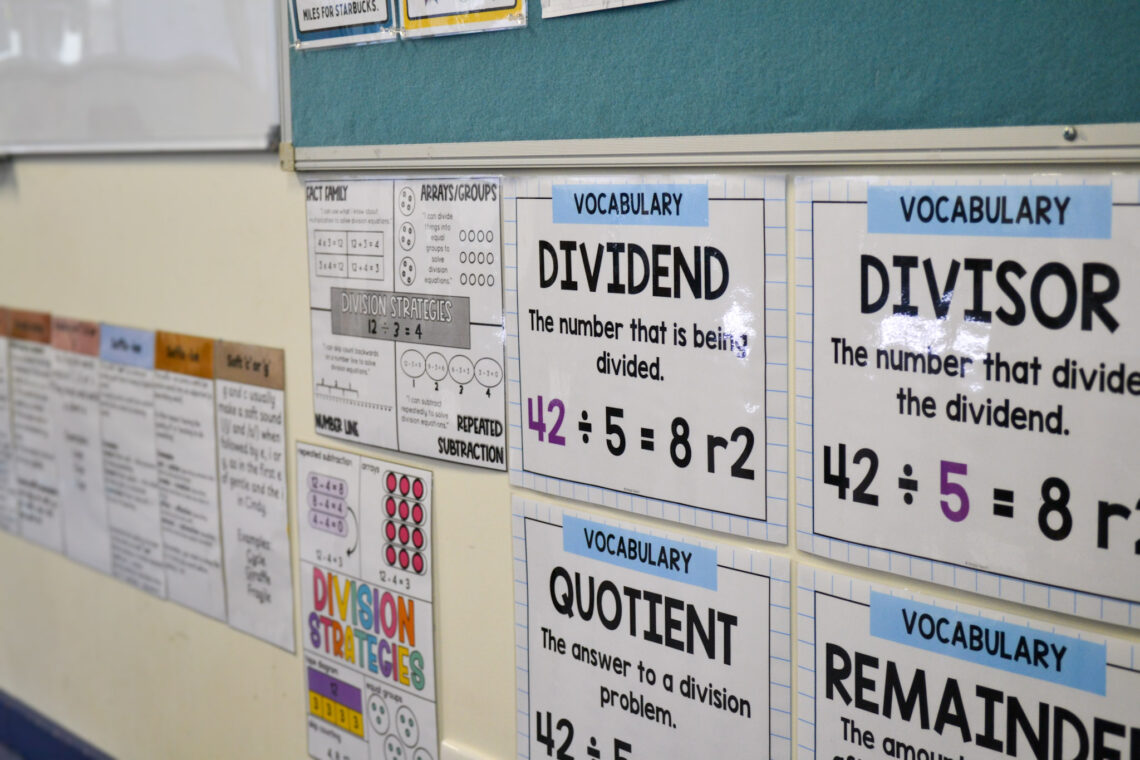
During this stage, teachers explicitly teach our students new concepts, skills and strategies. Teachers model mathematical thinking, introduce mathematical vocabulary and demonstrate strategies and worked examples. Students learn the what, why and how of the mathematics being taught.
Explore
Students apply their learning through meaningful tasks and investigations where they: solve rich mathematical problems, work independently, with partners or in small groups, explore using hands-on materials and manipulatives, explain and justify their thinking and apply their learning to real-world situations. Tasks are designed to challenge all learners, with multiple entry points so every student can experience success while being appropriately extended.
Summarise
Students reflect on and consolidate their learning. During this stage students: share strategies and solutions, explain and justify their reasoning, receive feedback from teachers and peers, reflect on their progress and set goals for future learning. This helps students deepen their understanding and recognise their growth as mathematicians.
Building Understanding, Fluency and Mastery
We believe mathematical mastery develops over time through regular practice, retrieval and application. Students frequently revisit previously taught concepts through:
- Number talks
- Mental computation activities
- Mathematical discussions
- Games and fluency practice
- Review and retrieval activities
These opportunities strengthen recall, improve retention and help students develop confidence and automaticity with key mathematical concepts and skills.
Our students then apply their learning through rich problem-solving tasks, investigations and real-world challenges that encourage deeper thinking and understanding.
Learning Through Hands-On Experiences
Students learn mathematics best when they can see, discuss and represent their ideas using a range of materials and models.
Across all year levels, teachers use a range of materials and representations to make mathematical thinking visible and accessible. Hands-on learning helps students develop conceptual understanding before moving towards more abstract thinking and symbolic representations.
Developing Critical and Creative Thinkers
Mathematics at HEPS is about much more than finding answers.
Students are encouraged to question, reason, justify their thinking, explore different strategies and evaluate solutions. Through challenging tasks and collaborative learning experiences, students develop the Critical and Creative Thinking Capability and learn to approach problems with curiosity and flexibility.
We actively support students to embrace our thinking culture by using thinking routines from Harvard University’s Project Zero to support students in making their thinking visible. These routines help students explain their reasoning, make connections, consider different perspectives and reflect on their learning. By talking about and sharing their thinking, students develop stronger problem-solving, communication and metacognitive skills.
What Students Learn
The Victorian Curriculum organises Mathematics across six strands:
- Number: Developing number sense, place value and calculation skills.
- Algebra: Recognising patterns, relationships and mathematical rules.
- Measurement: Exploring length, area, volume, mass, capacity, time and temperature.
- Space: Investigating shapes, location, movement and spatial reasoning.
- Statistics: Collecting, representing and interpreting data.
- Probability: Understanding chance, likelihood and predicting outcomes.
Across all strands, students develop the mathematical proficiencies of:
- Understanding
- Fluency
- Problem Solving
- Reasoning
Assessment and Feedback
Our assessment is ongoing and informs every stage of the learning process.
Teachers use a range of assessment practices, including observations, discussions, work samples, rich tasks and formal assessments, to monitor progress, provide timely feedback and plan the next steps in each student’s learning.